
Mobile Car Mould Removal Melbourne
Eliminate Mould, Spores & Musty Odours From Your Car, The Right Way.
Show Us The Mould Before We Arrive
Musty Smell
Damp Carpets
White/green Spots
Water Leak History
90+
Mobile
Ozone
Receipts
Signs of Vehicle Mould
Signs Your Car May Have Mould
Sometimes mould starts growing before you can clearly see it. Moisture trapped inside the vehicle can quickly create bad smells and bacteria.
Musty Smell
Visible Mould Spots
Wet Carpets or Foggy Windows
What Causes Mould in a Car?
Common Sources of Moisture Inside a Car
- Leaking door or window seals: Worn rubber allows rainwater to seep into the door or window cavity and drip onto carpets or sill trim over time.
- Blocked sunroof drains: Most sunroof systems have four drain tubes. When blocked with debris, water overflows directly into the headlining and A-pillar areas.
- Wet items left inside: Gym gear, damp umbrellas, wet pet bedding, and shopping bags all introduce moisture that evaporates slowly inside a sealed cabin.
- AC evaporator drain problems: A faulty drain causes condensation to pool under the dashboard and soak the footwell carpets, with no visible external leak.
- Flood or heavy-rain entry: Vehicles that have been partially submerged or heavily water-affected can retain moisture deep within the carpet underlay for months.
- Spilled drinks left untreated: Liquid soaking into the seat foam and never properly extracted creates a warm, damp environment that is perfect for mould.
- Passenger condensation: Breathing and body heat in a cold, enclosed vehicle generate significant condensation, particularly when ventilation is poor.
How Mould Spreads Inside a Vehicle
One of the most common mistakes people make is treating car mould as a surface problem. They wipe the visible patch, spray a cleaner, and consider the job done. But mould does not stay where you can see it, and understanding how it travels explains why professional treatment matters so much.
Spore Dispersal
When mould is disturbed, even by sitting on an affected seat or running a hand across mouldy carpet, it releases thousands of microscopic spores into the air. Those spores travel through the cabin and settle on other surfaces, where they establish new colonies if moisture is present. Wiping or vacuuming mould without proper containment and treatment can actually make the contamination worse, not better.
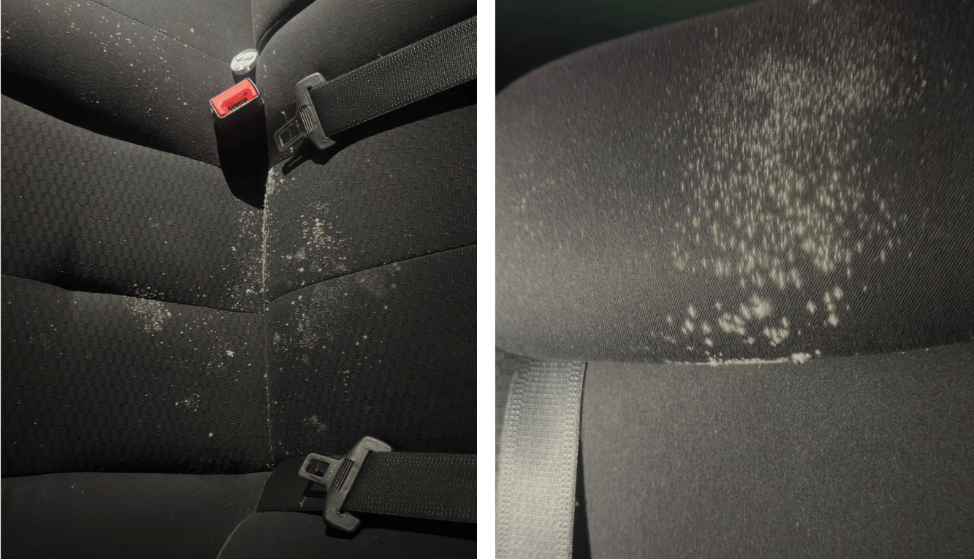
Hidden Growth Pathways For Mould
Mould follows moisture. In a vehicle, that path is rarely obvious:
- Carpet underlay: The foam or felt beneath the carpet absorbs and holds water long after the surface feels dry. Mould in the underlay travels upward into carpet fibres and downward toward the floor pan.
- Seat foam and batting: Liquid spills cause the foam inside cushions to hold invisible moisture. Mould growing inside a seat cushion is not visible until it has already spread significantly.
- Door trims and panels: Water entering through a leaking seal runs down inside the door cavity and saturates the lower door trim foam.
- Boot lining and spare tyre well: Frequently overlooked areas that collect water from leaking tail-light or boot lid seals.
- Roof lining: Blocked sunroof drains cause water to saturate the headlining foam, spreading mould silently across the entire ceiling of the car.
- Air vents and ducting: Spores that enter the ventilation system are redistributed every time the fan runs.
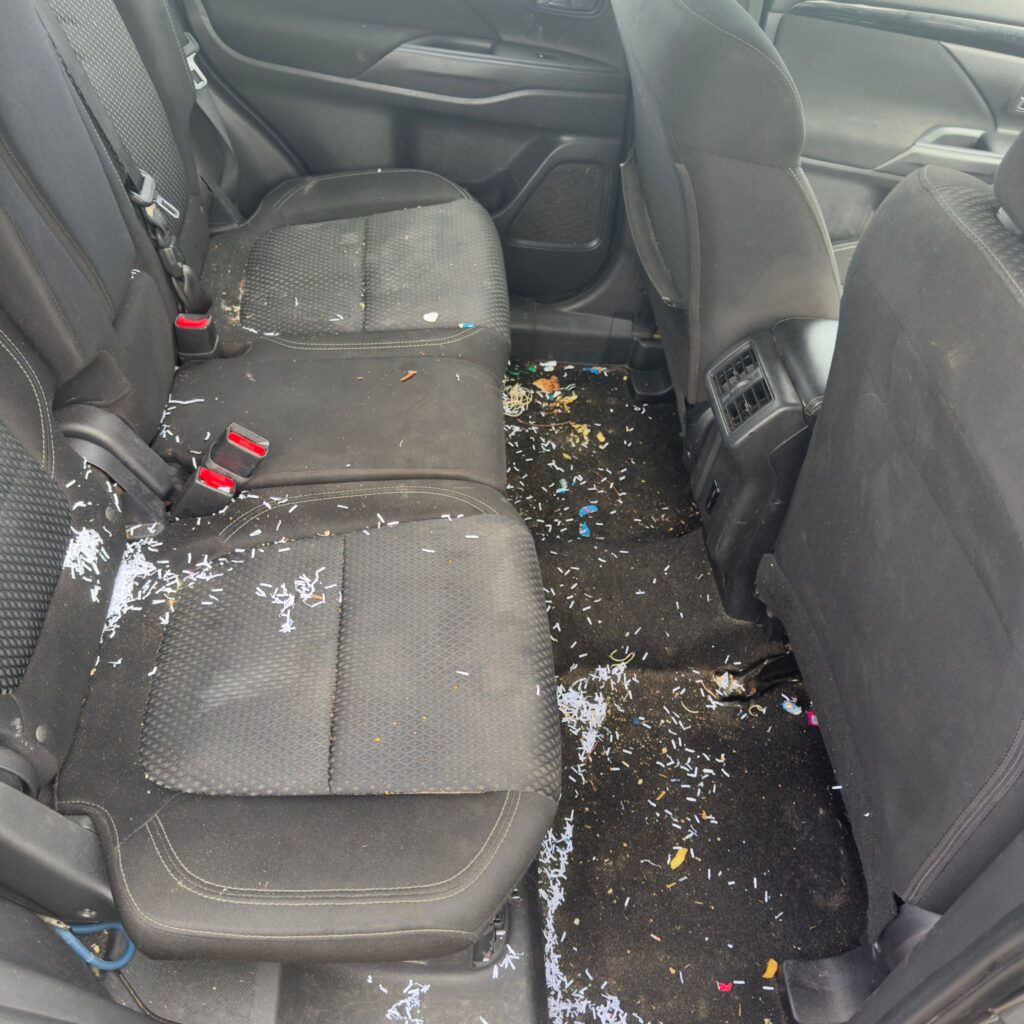
Health Risks of Mould in Cars
A mouldy car interior is not just unpleasant; it can affect your health, particularly if you spend significant time driving. The concern is not only the mould you can see. It is the invisible mould spores and mycotoxins released into the cabin air every time you open the door, run the air conditioning, or simply move around in your seat.
Who Is Most at Risk?
Higher Vulnerability
- Children sitting close to carpet level in car seats
- People with asthma, mould spores are a documented trigger
- Allergy sufferers sensitive to mildew or fungal allergens
- Elderly passengers with reduced immune function
Also at Risk
- NDIS clients using vehicles frequently for transport
- People with chronic sinusitis or bronchitis
- Anyone spending long daily periods in a contaminated vehicle
- Pregnant women in the early stages
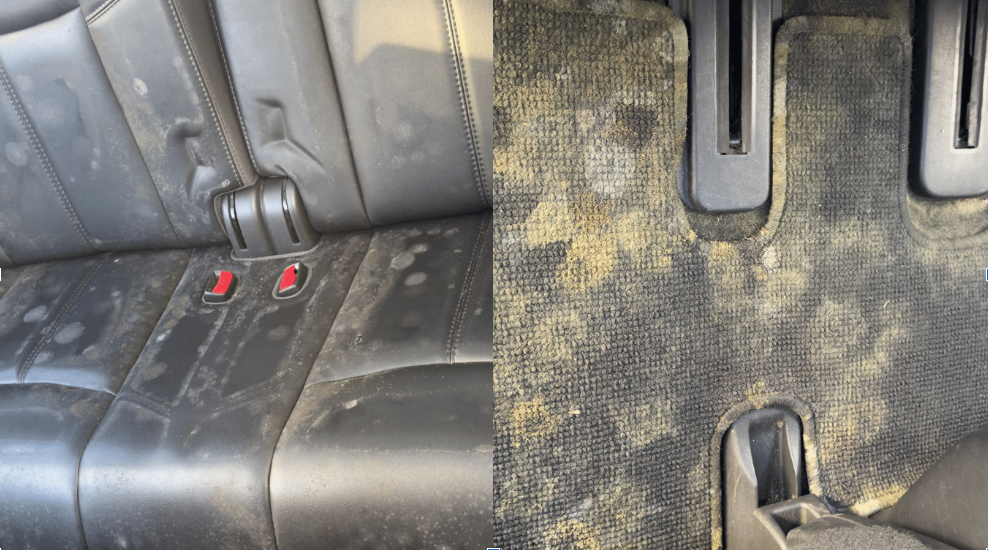
Why Proper Mould Removal Matters
Do not just wipe it!
Mould is more than just dirt on the seats.
Simply wiping away mould may spread spores throughout the cabin and leave behind hidden moisture. Proper mould treatment helps clean affected areas, reduce odours, and improve cabin hygiene.
Our mould removal service includes:
- Deep cleaning
- Steam treatment
- Hot water extraction
- Surface sanitising
- Moisture removal
- Ozone odour treatment
Water Leak Diagnosis — Finding Where the Moisture Is Coming From
Before any car mould treatment begins, it is worth understanding whether an active water leak is contributing to the problem. We can help identify likely entry points based on the locations of mould and moisture during our inspection.
Location of Mould or Damp Area | Likely Water Entry Point |
Front footwell carpets | Windscreen seal, AC drain, or cabin filter area |
Rear footwell or rear seat base | Rear door seal or quarter glass seal |
Roof lining (headlining) | Blocked sunroof drains or roof antenna seal |
Boot floor or spare tyre well | Tail-light seals, boot lid seal, number plate seal |
Under front seats | AC evaporator drain or door sill seal |
Door lower trim or sill | Blocked door, drain holes, or window seal failure |
During our car mould inspection, we note areas of active dampness and advise on the most likely entry points we observe. For a formal leak test and repair, we recommend engaging a qualified automotive repairer.
Why Mould Comes Back After Cleaning
The Moisture Source Was Not Fixed
Hidden Mould Was Not Fully Reached
Ongoing Condensation
Our approach: We do not just clean and leave. We check for signs of active moisture entry and advise you on what may need repair to give you the best long-term outcome from your car mould removal service.
Our Car Mould Inspection Process
1
Step 1: Photo Review Before Arrival
2
Step 2: Visual Inspection on Arrival
3
Step 3: Moisture Assessment
4
Step 4: Odour Identification
5
Step 5: Severity Assessment and Treatment Recommendation
Moisture Testing To Know What Is Wet Beneath the Surface
One of the key challenges in car mould treatment is that the wettest, most contaminated areas are often invisible. Carpet surfaces can feel dry to the touch while the underlay beneath holds significant moisture. Seat cushions can appear normal while the foam inside is saturated.
Why Surface Appearance Is Not Enough
In a warm Melbourne car parked in the sun, the surface layer of carpet can dry out within hours while the underlay remains wet for days or weeks. Mould growing in the underlay is not visible from above, but it produces spores and odour that travel upward into the cabin. A vehicle that smells fresh immediately after a surface clean can develop that musty odour again within days if sub-surface moisture was not properly addressed.
By properly assessing moisture levels, we can:
Prioritise where the deepest cleaning and extraction is needed
Determine whether carpet lifting is necessary to reach the contaminated underlay
Assess whether the underlay can be dried and saved, or needs to be replaced
Confirm whether moisture appears residual or from an active ongoing entry point
Gauge drying progress after hot water extraction or steam treatment
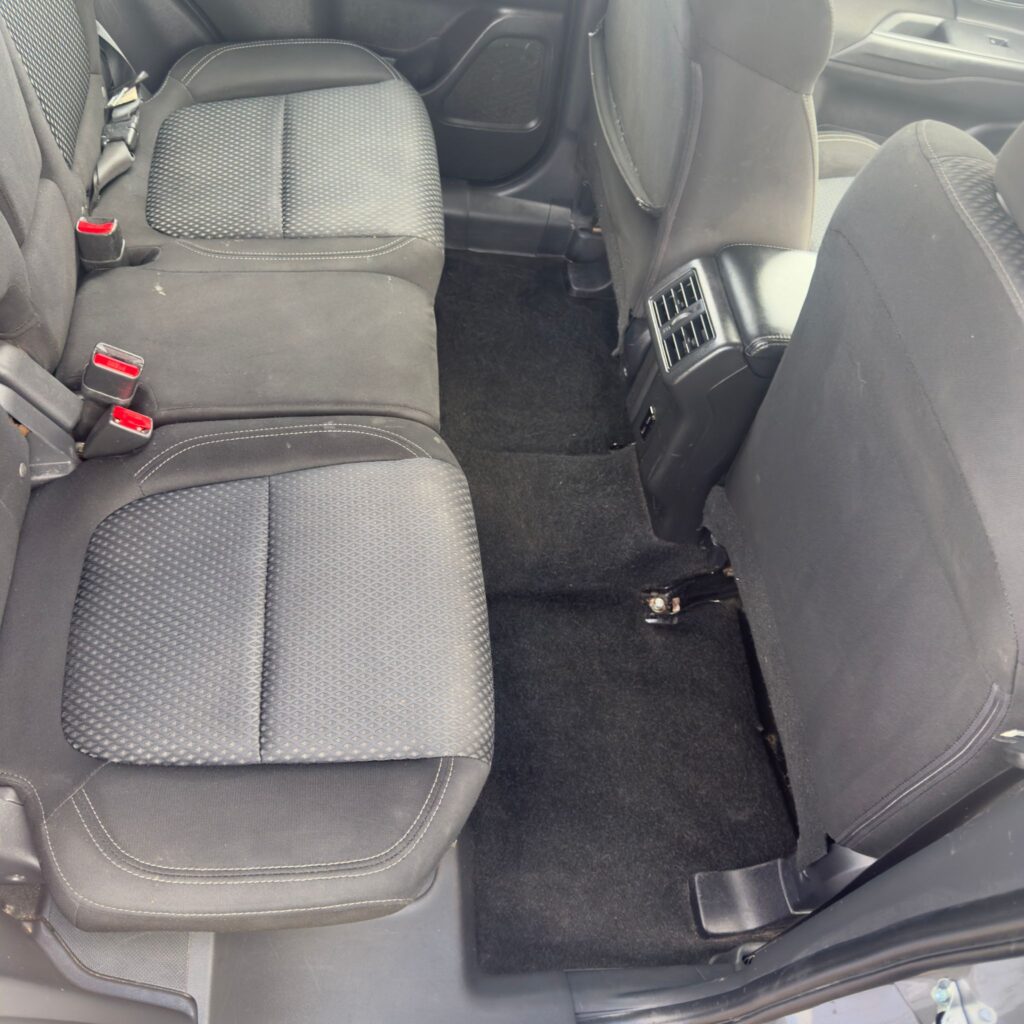
Our Car Mould Removal Process
After the inspection, we begin removing active mould from the vehicle using professional techniques and specialised products. Here is how we work:
1
Step 1: Interior Preparation
Before treatment begins, we remove loose items and prepare the interior for safe mould removal. Sensitive areas are protected where necessary to reduce cross-contamination throughout the cleaning process.
2
Step 2: HEPA Vacuuming
3
Step 3: Surface Mould Removal
4
Step 4: Cleaning Hard-to-Reach Areas
5
Step 5: Surface Cleaning and Wipe Down
Our Vehicle Mould Remediation Process
Removing mould is only part of the solution. Our remediation process focuses on drying the vehicle, restoring the interior, and addressing the conditions that allow mould to return.
1
Step 1: Seat Removal
2
Step 2: Carpet Lifting
3
Step 3: Underlay Drying
4
Step 4: Interior Sanitisation
5
Step 5: Ozone Treatment (If Required)
6
Step 6: Interior Reassembly
Once the interior is completely dry, carpets, underlays, seats, and any removed components are carefully reinstalled to manufacturer standards.
7
Step 7: Final Quality Check
Ozone Treatment — What It Can and Cannot Do
What Is Ozone Treatment?
An ozone generator produces ozone (O₃) and circulates it through the vehicle interior. Ozone is a powerful oxidising agent; it reacts chemically with organic compounds that cause odour, breaking them down at a molecular level. This makes it particularly effective at neutralising the musty, damp smell associated with mould contamination and water damage.
What Ozone Treatment Can Do
- Significantly reduce or eliminate musty odours from mould, mildew, and bacteria
- Penetrates into vents, ducting, seat foam, and carpet fibres where sprays cannot easily reach
- Improve overall cabin air freshness after mould cleaning
- Reduce airborne bacteria and some biological contaminants
- Help with smoke, pet, and food odours as well
What Ozone Treatment Cannot Do
- Remove visible mould. Physical cleaning must be done first
- Fix a water leak or stop moisture from re-entering
- Permanently eliminate odour if the moisture source is still active
- Replace the need for deep cleaning, extraction, or surface treatment
- Reach mould deep within sealed foam or beneath un-lifted carpet
When Replacement Is Necessary
Part of providing the best car mould removal Melbourne customers can rely on is being honest about when cleaning alone is not the right answer. There are situations where contamination has progressed to the point that replacing certain materials is the better long-term decision.
- Carpet underlay that is fully saturated and structurally compromised
- Seat foam with deep, extensive mould penetration
- Heavily moulded roof lining
- Door trims with compromised foam backing
- Flood-damaged vehicles
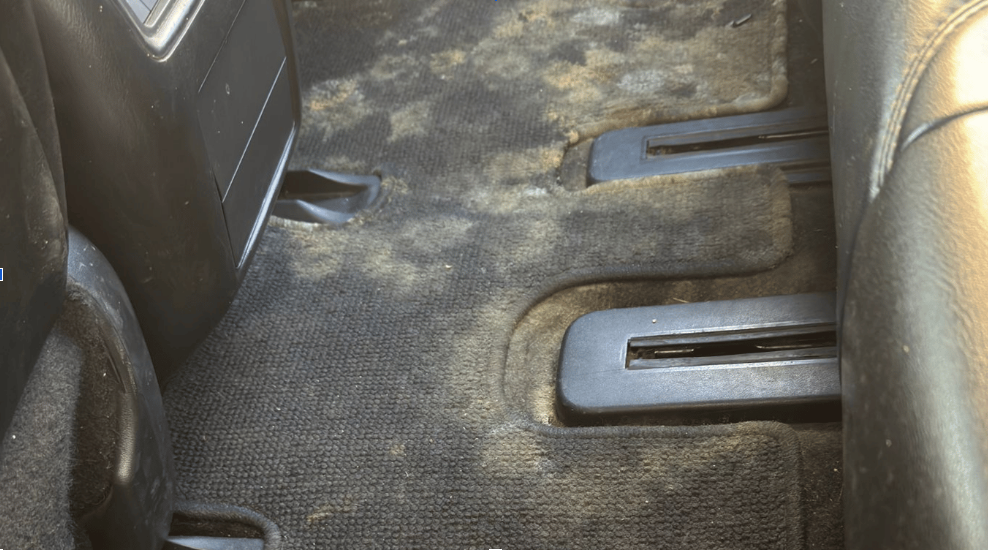
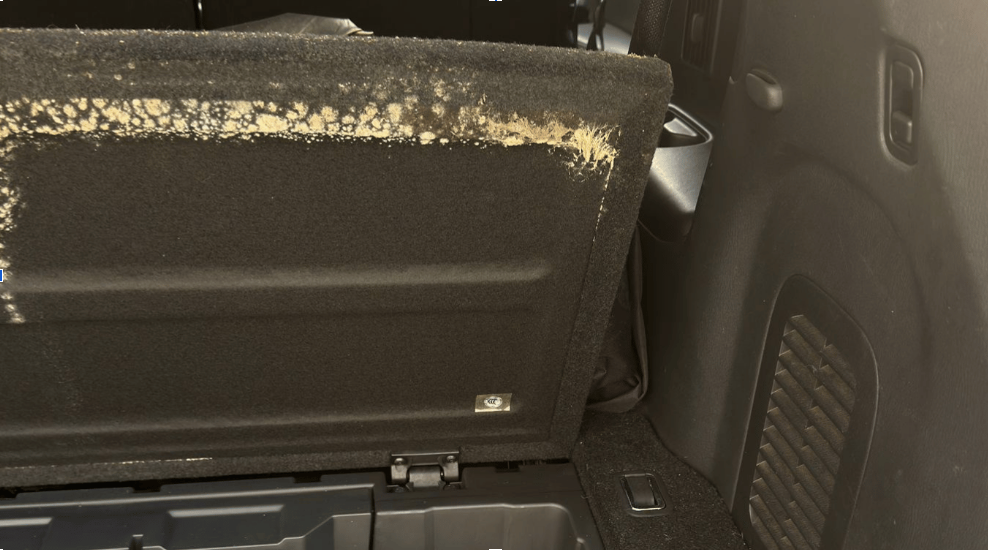
Fast Quote Process
Show Us The Mould Before We Arrive
Send clear photos of:
Seats, carpets, boot, roof lining, footwells, and any visible mould patches.
Musty Smell
Damp Carpets
White/green Spots
Water Leak History
Pricing Guide
Car Mould Removal Pricing
The price of mould removal in Melbourne depends on the severity of the mould problem.
Heavy mould contamination takes more time, deeper cleaning, protective equipment, and longer drying times. That is why mould removal should not be priced like a normal interior detail.
Assessment
Photo Assessment
Free
- Send photos before booking
- We inspect visible mould levels
- We recommend the right treatment
- Best starting point for accurate pricing
Most Common
Standard Mould Treatment
Starting From $450+
- Targeted mould cleaning
- Steam cleaning and sanitising
- Hot water extraction where suitable
- Interior surface treatment
- Ozone treatment available
Severe Cases
Heavy Mould Remediation
Quoted After Photos
- Multiple areas affected
- Strong odours present
- Water leak or flood history
- Longer treatment time
- May need repeat treatment
Real People. Real Cars. Real Results.
EXCELLENTTrustindex verifies that the original source of the review is Google. Will was absolutely amazing! The service was fantastic from start to finish, and he did such a great job with my car. He was friendly, professional and really thorough. I’m so happy with the result and would definitely recommend Will’s Car Detailing to anyone looking for a reliable and high-quality service. Thank you so much, Will! 😊Posted on GoogleTrustindex verifies that the original source of the review is Google. Great service! Very professional, friendly and efficient. They did an excellent job cleaning my car, including vomit extraction and ozone treatment to remove the smell. The car was left clean and fresh. Very happy with the service and would definitely recommend them. Thank you!Posted on GoogleTrustindex verifies that the original source of the review is Google. Excellent service. Goes right to your house so very convenientPosted on GoogleTrustindex verifies that the original source of the review is Google. Wills car detailing detailed my Land Cruiser and Hilux and I couldn’t be happier with how the cars turned out. The service was amazing and we will 100% use them again!Posted on GoogleTrustindex verifies that the original source of the review is Google. I reached out to Will‘s Car Detailing, hoping he could restore a customer’s mouldy car. This thing had its own technicolour ecosystem- and I wasn’t game to touch it! Well, I was blown away by the result! Front to back the car was like new, no sign of mould or moisture whatsoever. Will also found the water leak, which has caused the whole drama. From beginning to end, I had excellent communication, upfront pricing, progress photos and all my questions and concerns answered. 5 stars from me!Posted on GoogleTrustindex verifies that the original source of the review is Google. Outstanding result! Will did an incredible job detailing my car. The results are fantastic, and the vehicle is sparkling clean inside and out. Exceptional attention to detail—couldn't be happier. Highly recommend!Posted on GoogleTrustindex verifies that the original source of the review is Google. First class service with a smile! Zayn was fantastic, accommodating and super thorough. Will define use again, and highly recommended!!!Posted on GoogleTrustindex verifies that the original source of the review is Google. Will did an exceptional job on an interior detail of my car & outside wash !!! I am beyond happy with the time and detail he put into making sure my car was super clean. A great price for great quality!! Highly recommendPosted on GoogleTrustindex verifies that the original source of the review is Google. Really good work, quick responsePosted on GoogleTrustindex verifies that the original source of the review is Google. Great job! Car looks brand new! Will be booking with Will again in the future
Honest Expectations
What Car Mould Removal Can and Cannot Do
Mould can return if the moisture source is not fixed. We believe in giving honest advice so customers know what to expect.
What We Can Help With
- Remove visible mould contamination
- Deep clean affected interior areas
- Reduce moisture where possible
- Help reduce musty odours
- Provide invoices for records or claims
Problems That May Need Separate Repairs
- Leaking door seals
- Blocked sunroof drains
- Water entering through windows
- Flood damage under carpets
- Damaged roof lining
Insurance, NDIS & Work Receipts
Need Proof Of Mould and Odour Removal Service?
We can provide detailed invoices for mould cleaning and odour treatment services. This may help customers needing records for insurance, work vehicles, NDIS, or business purposes.
What Our Documentation Includes
- Itemised description of all services performed
- Notes on the condition of the vehicle on arrival and areas treated
- Business name, ABN, and contact details
- GST-compliant tax invoice
- Before and after photos available on request
Who Commonly Uses Our Invoices
- Comprehensive insurance claimants: Vehicles affected by flooding, storm damage, or water entry during a weather event
- NDIS participants and support coordinators: Where documentation is needed for funding purposes on transport vehicles
- Business vehicle owners: Needing tax records and proof of maintenance
- Fleet managers: Maintaining service records for company vehicles
- Rental vehicle operators or landlords: Where cost recovery documentation is required
Ready for a Mould-Free Car That's Actually Safe to Breathe In?
Send Photos Before Booking
Frequently Asked Questions
Mould can contribute to unpleasant smells, poor cabin hygiene and irritation, especially when moisture is trapped inside the vehicle for long periods.
Yes. If moisture remains untreated, mould spores can continue spreading through carpets, seats, trims and air circulation areas.
Yes. If the moisture source or water leak is not properly repaired, mould can return over time.
Mould remediation involves deeper cleaning, steam treatment, extraction, sanitising, moisture control and additional safety processes compared to a standard interior clean.
Yes, musty smells are often one of the earliest signs of trapped moisture, bacteria or hidden mould growth before visible spots appear.
In many cases, deep cleaning and ozone treatment greatly reduce or remove musty odours. Ongoing moisture problems may cause smells to return later.
Yes, photos help us assess the severity, affected areas and recommend the right treatment before we arrive.